Wednesday, 9 December 2015

Sunday, 15 November 2015
Homologous organs class x
Examples of Homology
Homology refers to two things that have an
equivalent role or relationship. Homology is important in comparative biology
since it makes it possible to determine if two different animals or plants
share a common ancestor. Essentially, homology in this context means that there
are two species that have related parts that do similar things, but that are
not exactly the same.
Homology In the
Animal Kingdom
Following are some examples of homology:
·
The arm of a human, the wing of a bird
or a bat, the leg of a dog and the flipper of a dolphin or whale are homologous
structures. They are different and have a different purpose, but they are
similar and share common traits. They are considered homologous structures
because they have a similar underlying anatomy.
·
The forelimbs of a frog, a bird, a
rabbit and a lizard look very different because they have evolved differently
to account for the specific lifestyles of each animal. However, they share a
common ancestor and a common set of bones (the radius, ulna and humerus). The
shared bones date back to a prehistoric fish that emerged onto land, eventually
becoming an extinct transitional animal from which they evolved. These
different structures are also homologous to the arms of people, the wings of
the bat, and the other animal parts described above.
·
The pelvis of a dog, of a cat and of a
human and of a snake are homologous structures.
·
The tailbone of a human being and the
tail of a monkey are examples of homology. The tailbone is actually called the
tailbone because of this shared lineage. Because a human doesn’t actually have
a tail but the tailbone is the last vestige or remains of where a tail would
be, it is referred to as “vestigial.”
·
The leaves of a pitcher plant, a Venus
fly trap, a cactus and a poinsettia are all examples of homology. They are
homologous structures because, although they have different shapes and
different functions today, they all share a common ancestor.
·
The mouthparts and the antennae of
different insects such as the grasshopper, the honeybee, the butterfly and the
mosquito are used for different purposes. The grasshopper, for example,
primarily bites and chews while the honeybee bites and the butterfly sucks
pollen. Although different today, these different parts are examples of
homology because they share the same basic structure which was just modified or
enlarged as needed for the particular species.
·
Non-identical chromosomes in DNA that
can pair with each other and that are believed to share common ancestry are
also examples of homology. They can also indicate that there is a common or
shared function in the chromosomes.
Homologous structures can be traced back to the last common ancestor
that the animal’s shared. For example, if the wing of a bat and the forearm of
a person are examples of homology, this means that the anatomical structure of
the forearm and of the wing were both present in the last common ancestor along
the evolutionary chain that was shared by the bird and bat.
Now you have lots of examples of homology and you have a better
understanding of how homology works in the field of comparative biology.
·
Read more at http://examples.yourdictionary.com/examples-of-homology.html#Oa4jyRpXqakC3LoV.99
Monday, 2 November 2015
PROTISTA
- The kingdom includes unicellular eukaryotic organisms.
- They are primarily aquatic
- They have well organized nucleus and complex membranous organelles.
- They have hair like cilia, whip like flagella or pseudopodia for locomotion.
- Some protists are plant like with cellulosic cell wall and chloroplasts. They are autotrophs.Eg: diatoms, dinoflagellates.
- Some protists have animal like cells . They are called protozoans and are heterotrophs or holozoic. Eg: amoeba, paramoecium, Plasmodium
paramoecium 

GYMNOSPERMS
GYMNO (NAKED) SPERMA(SEEDS)
- It includes medium sized and tall trees as well as shrubs.Sequoia (giant red wood tree) is one of the tallest tree species.
- Leaves in gymnospems are well adapted to withstand extremes of temperature, humidity and wind. Thick cuticle, sunken stomata and needle like leaves reduce the surface area.
- These are the plants in which ovules are not enclosed by any ovary wall.
- After fertilisation seeds remain exposed and therefore these plants are called naked seeded plants
- Gymnosperms produce microspores and megaspores which are produced in microsporangia and megasporangia borne on sporophylls
- The sporophylls are arranged spirally on axis to form male and female cones respectively.These may be borne on the dsame tree (Pinus) or on different trees( Cycads)
- After fertilisation zygote develops into embryo and ovules develop into seeds.
- Gametophyte does not have an independent existence. They remain within the sporangia retained on the sporophyte.
- Children you can watch these videos on youtube for purpose of clarity
| mature female cone pinus |
| cycad female cone |
 |
| cycas male cone |
| second year male cone pinus |
www.youtube.com
Nature Notes Female and Male Pine Cones - Longleaf Pine.
Male or Female Sago, How to tell the difference
Friday, 2 October 2015
CHARACTERS OF CRYPTOGAMS
The subkingdom is divided into three divisions.
- Thallophyta
- Bryophyta
- Pteridophyyta
- This division includes plants that are not differentiated into root, stem, leaf or flower.
- They are aquatic, fresh water as well as marine.
- Vascular tissue is absent.
- sex organs are simple and single celled. Embryo formation after fertilization is absent.
- Life cycle is completed in two phases dominant haploid gametophytic phase and shortlived , diploid sporophytic phase.
- The plants are called algae which may be single celled (chlamydomonas), colonial (volvox) or filamentous( spirogyra)
- The plant body is thallus or foliose. Roots like rhizoids arise from underside to anchor the plant.
- These are simplest land plants, confined to damp places. These are also called AMPHIBIANS OF PLANT KINGDOM as they live on land but are dependent on water for sexual reproduction
- True vascular tissue is absent.
- Sex organs are multi cellular. Fertilization is external and they need water for gametes to move.Embryo stage is present .Sporophyte is dependent over the gametophyte stage.Sporophyte is differentiated into foot, seta and capsule.
- This division includes mosses and liverworts.( Funaria, Riccia, Marchantia)
- The plant body is differentiated into true roots, stem and leaves.
- They are the highly evolved cryptogams.Stem is generally underground, leaves are made up of leaflets bearing sporangia on the underside.They are the first terrestrial plants to possess vascular tissues.
- These contain vascular tissue.
- Sex organs are multicellular and jacketed.Embryo stageis present. Main plant body is sporophye.
- This division includes ferns( Dryopteris, Pteris) and selaginella.
PLANT KINGDOM
PLANT KINGDOM
It includes all the organisms with the following features:- Eukaryotic, multi cellular with photosynthetic mode of nutrition.These are normally called producers.
- Body is usually branched and irregular. Growth in plants is unlimited .
- Cell wall made of cellulose is present.
- Food is stored in the form of starch.
- The plants are usually fixed or free floating. Active locomotion is absent.
- Asexual as well as sexual reproduction takes place. Embryo stage is present except in alga
- Exceptions:
- Cuscuta is a parasite.
- Nepenthes , Drosera are insectivorous plants.
- BASIS OF DIVISION OF KINGDOM PLANTAE
- Differentiation of plant body into distinct components.
- Presence of vascular tissue.
- Ability to bear seeds
- Enclosure of seeds in fruits.
SUBKINGDOMS:
Eichler divided the kingdom into two sub kingdoms
- CRYPTOGAMS: This group includes plants which are flowerless and do not bear seeds. In these plants, reproduction is carried on by some method other than the seeds or flowers. The sex organs are hidden and not conspicuous.
- PHANEROGAMS: This is the highest evolved group of plants. It includes flowering and seed bearing plants. They reproduce sexually by means of seeds.
Thursday, 1 October 2015
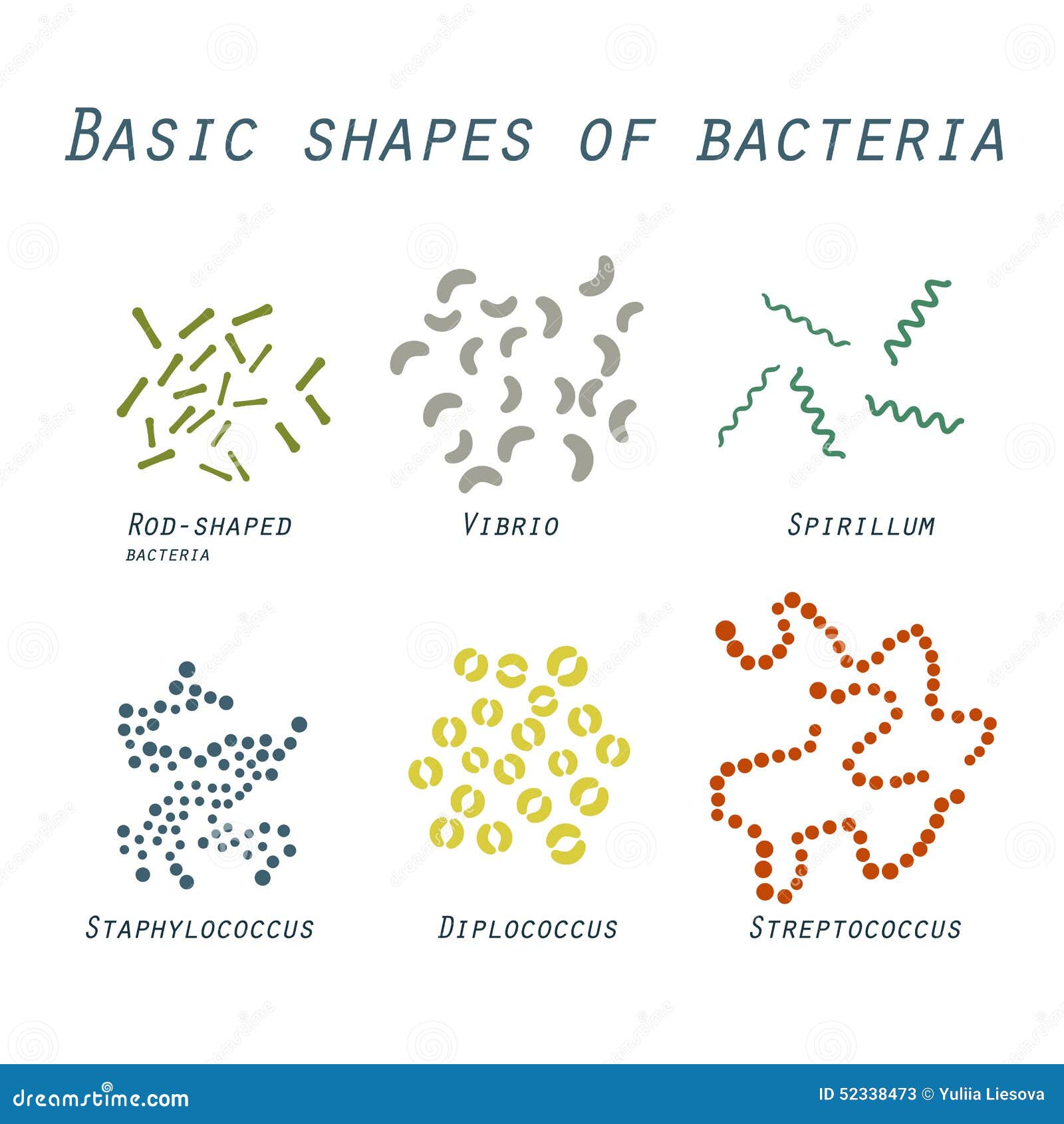
DIAGRAMS OF MONERA
 |
| TYPICAL BACTERIAL CELL |
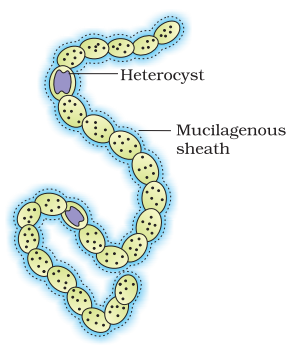 |
| NOSTOC |
 |
| ANABAENA |
 |
| MYCOPLASMA |
Subscribe to:
Posts (Atom)